
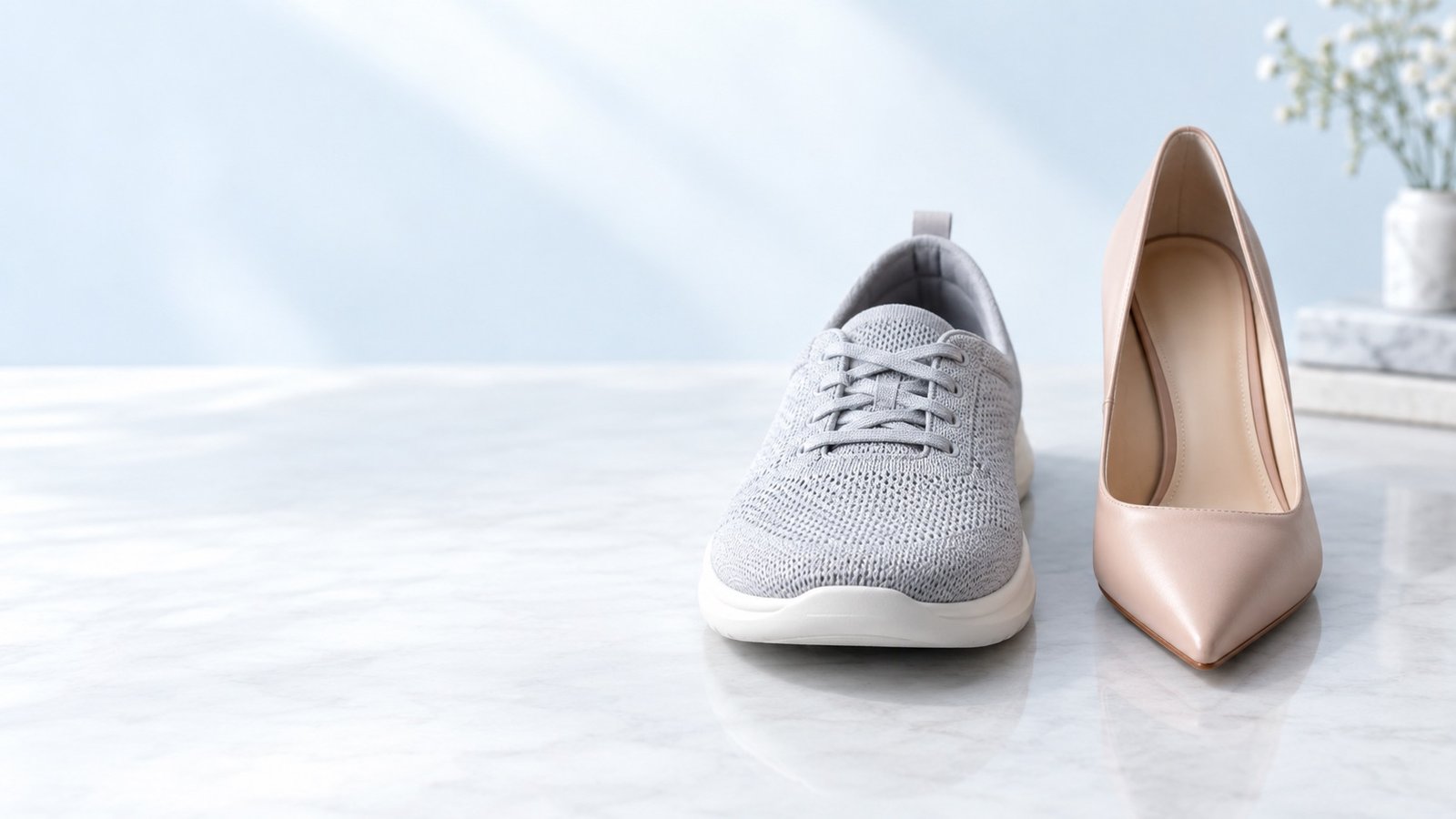
Morton’s neuroma is a common cause of burning pain in the ball of the foot, usually between the third and fourth toes. Despite the name, it isn’t a tumor — it’s a thickening of the tissue around a nerve that gets pinched and irritated, most often by tight shoes and forefoot pressure. The classic tip-off is the feeling that you’re standing on a marble or a bunched-up sock, sometimes with numbness or tingling in the toes. The reassuring part: most cases improve with roomier shoes and offloading. Here’s what causes it and how it’s treated.
A Morton’s neuroma is a thickening of nerve tissue around one of the nerves that runs between the toe bones — most commonly the nerve between the third and fourth toes. When that nerve is repeatedly compressed or irritated, it swells and becomes painful. It’s important to know it is not a cancer or a true tumor; it’s an enlargement of an existing nerve, which is why the focus of treatment is taking pressure off it.
The exact cause isn’t fully known, but the common thread is a nerve being squeezed or compressed in the forefoot. Narrow, pointed, or high-heeled shoes crowd the toe bones together and press on the nerve, and high-impact activities like running add repeated pressure on the ball of the foot. Foot shapes that shift more load forward — a bunion, a hammertoe, flat feet, or a high arch — can make it more likely. In short, anything that keeps compressing that nerve is what feeds the problem.
Treatment almost always starts conservatively, by taking pressure off the nerve. That means switching to low-heeled shoes with a wide toe box, easing off the activities that flare it, and using a shoe insert or a metatarsal pad to spread the bones and offload the nerve. If those steps aren’t enough, the next options can include corticosteroid injections, and surgery is considered only when conservative care hasn’t helped — often after a few months. For the full local-treatment picture, see our page on Morton’s neuroma treatment in Long Beach.
If Morton’s neuroma pain continues despite roomier shoes, pads, and rest, it’s worth a podiatric evaluation to review your options. Our non-surgical 3-Month Regenerative Therapy Program — PRP, ozone, and hyperbaric oxygen — is one approach some patients ask about for persistent forefoot and nerve symptoms. Whether it’s appropriate for you depends on an in-person exam.
Because a Morton’s neuroma shares symptoms with other forefoot problems, a proper diagnosis is what points you to the right treatment — and the earlier the nerve is offloaded, the better it tends to respond. If the ache is more of a general ball-of-foot pain, see our guide to ball of foot pain. To have yours looked at, call (562) 426-2551, or read Cleveland Clinic’s overview of Morton’s neuroma.
Morton’s neuroma is a thickening of the tissue around a nerve between the toe bones — usually between the third and fourth toes — that gets pinched and irritated; it is not a tumor or cancer. It causes burning ball-of-foot pain and the classic feeling of standing on a marble, and treatment centers on taking pressure off the nerve.
It typically feels like standing on a pebble or a bunched-up sock, with burning or shooting pain in the ball of the foot and sometimes numbness or tingling in the toes. Symptoms are usually worse in tight or high-heeled shoes and often ease when you take the shoe off, which is a useful clue to have it checked.
Start by switching to low-heeled shoes with a wide toe box, easing off high-impact activity, and adding a metatarsal pad or insert to offload the nerve — this relieves many cases. If symptoms persist, options such as corticosteroid injections or, as a last resort, surgery can be discussed, so a nerve that isn’t settling should be evaluated.
It often improves once the nerve stops being compressed — roomier shoes and offloading do much of that work — but it usually won’t fully resolve if the squeezing continues, and it can persist or return. If it hasn’t improved within a few months of footwear changes, have it evaluated rather than waiting.
See one for new or worsening pain, numbness, or swelling in the ball of the foot, or symptoms that don’t improve within a few months of roomier shoes and offloading. If you have diabetes or poor circulation, have any foot pain or numbness looked at in person rather than self-managing.