
Wondering how to prevent toenail fungus? The short answer: keep your feet dry, give the fungus nowhere to live, and never walk barefoot where it waits. Summer is peak season — heat, sweat, pools, and sandals all raise the odds — but the same conditions that spread fungus also make prevention easy to practice. Here are the habits our podiatrists at Kim Holistic Foot & Ankle Center in Long Beach recommend, refined over 35+ years of treating the nails that didn’t get this advice in time.
The fungi behind nail infections (dermatophytes) thrive in warmth and moisture. Summer supplies both: sweaty shoes, wet pool decks, communal showers, and gym locker rooms. Add a tiny bit of nail trauma — a stubbed toe, a tight running shoe — and the fungus has its doorway. The American College of Foot and Ankle Surgeons has a good overview of how fungal nail infections start.
After every swim or shower, towel-dry the spaces between your toes. It takes ten seconds and removes the moisture fungus needs most.
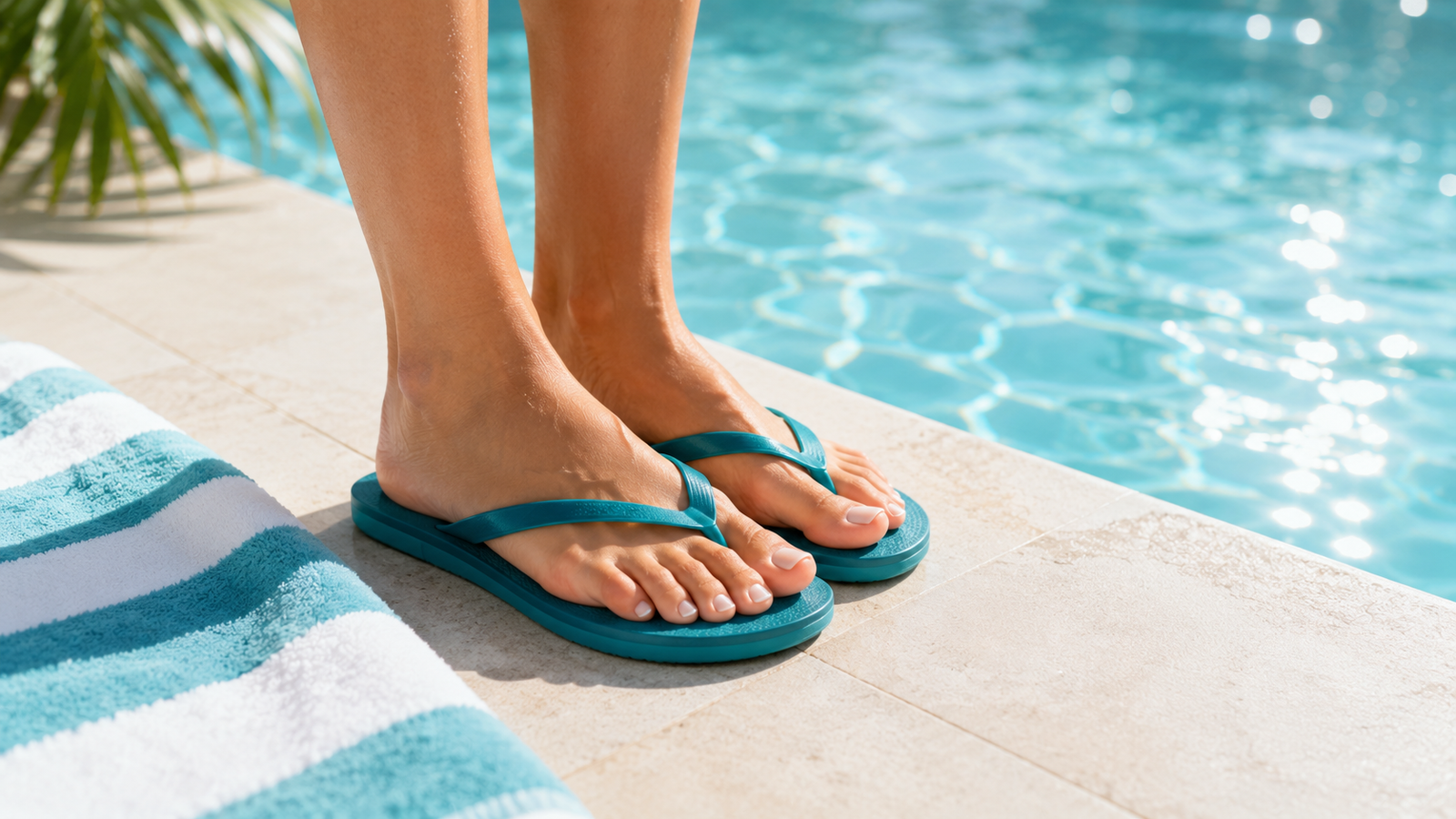
Pool decks, communal showers, locker rooms — never barefoot. Flip-flops are cheap insurance — a few dollars removes one of the biggest exposure risks of the season. Wet tile stays contaminated long after the crowd leaves, and a thin rubber sole is all it takes to break the contact.
Sweat-soaked shoes often need a day or two to dry out fully. Alternate two pairs so yesterday’s moisture isn’t waiting for today’s feet. If you only own one pair of everyday sneakers, summer is the season to change that — trade off with sandals or a mesh pair on alternate days.
Shoes are where reinfection hides. Two of our guides cover this: salting your shoes overnight to draw out moisture, and sanitizing them with spray. Giving footwear (and feet) some direct sunlight helps too.
Mesh uppers, leather, or sandals beat sealed synthetic shoes in summer. Change socks the moment they’re damp — moisture-wicking fabrics buy you extra hours.
Cut straight across, not too short, and don’t dig into corners. And never share clippers or files — fungus travels on tools.
The same fungus that causes athlete’s foot — itchy, peeling skin between the toes — is often what later invades the nail. Treating skin early is far easier than treating nail later. An over-the-counter antifungal cream used as directed usually settles the skin; if it stays cracked or itchy after a couple of weeks, have it looked at.
Choose salons that sterilize tools between clients (or bring your own), and skip polish on any nail that looks discolored — polish seals moisture in and hides early changes you’d want to catch. If you’d rather avoid the salon setting altogether, our office also offers a medical pedicure — routine nail and skin care performed in a clinical environment.
Early fungus is subtle — a small white or yellow spot near the nail edge. Caught at that stage, treatment is far simpler. If you have diabetes or poor circulation, skip self-treatment entirely and have any nail change checked by a podiatrist promptly — foot infections carry higher risks.
| Hot spot | Why it’s risky | What to do |
|---|---|---|
| Pool decks & communal showers | Warm, wet, high foot traffic | Sandals on, dry your toes after |
| Gym locker rooms | Sweat plus shared floors | Flip-flops, fresh socks after workouts |
| Your own old sneakers | Moisture and a fungus reservoir | Rotate pairs, salt or spray, sun-dry |
| Nail salons | Shared tools between clients | Sterilized or your own tools; skip polish on odd-looking nails |
Prevention lowers the risk — it can’t rewind an infection that’s already started. If a nail is thickening, yellowing, or crumbling, start with an accurate diagnosis: several conditions mimic fungus, and treating the wrong one wastes months. Curious about home options first? Read our honest take on Vicks VapoRub for toenail fungus — though if you have diabetes or poor circulation, skip home remedies and start with the exam. And when you’re ready for a structured plan, our toenail fungus treatment in Long Beach page explains how our podiatrists approach stubborn nails.
A thick, discolored, or loosening toenail isn’t always fungus — many abnormal-looking nails turn out to be an injury, psoriasis, or another condition. The first step is an exam, often with a nail culture, to find out what’s going on. If it is fungal, our 6-Month Fungal Toenail Program builds on that testing with a structured plan that can include prescription antifungal options, in-office nail care, and prevention steps. Whether it fits you depends on your exam. You can also read about toenail fungus treatment in Long Beach.
Usually because the shoes never got treated — they stay contaminated between summers, and warm, sweaty months reactivate the cycle. Prevention has to include your footwear (rotation, salt or spray, sunlight), not just your feet. If it still comes back every year, have a podiatrist confirm what you are dealing with — recurring “fungus” sometimes is not fungus at all.
Moisture control does most of the work: rotating pairs so each dries fully, coarse salt overnight to draw out dampness, direct sunlight, and disinfectant shoe sprays. No single method is instant — consistency over the season beats any one deep-clean.
It is best to get the nail diagnosed and treated first — many salons will decline visibly infected nails, and polish hides the changes your podiatrist needs to see. If you do go, tell the salon, and choose one that sterilizes tools between clients.
Questions about a stubborn nail — or want a prevention plan tailored to your feet? Call (562) 426-2551 or request an appointment at our Long Beach office.