
If you’ve had a gout attack, you already know how fast it comes on — often overnight, most often in the big toe joint, with pain so sharp that even a bedsheet hurts. It’s natural to look for the foods that trigger gout so you can avoid the next one. The foods and drinks most often linked to gout flares are organ meats, red meat, shellfish and certain fish, alcohol (especially beer), and drinks sweetened with high-fructose corn syrup — but food is only one part of the picture. Here’s what the evidence says about foods to limit, foods that may help, and why diet alone usually isn’t enough.
First, a safety note: a joint that is suddenly hot, red, and very swollen isn’t always gout. A joint infection can look almost the same and needs same-day care — urgent care or the ER if your doctor’s office is closed — especially if you have a fever, broken skin nearby, diabetes, or a weakened immune system. Not having a fever does not rule out an infection.
Gout is a type of inflammatory arthritis caused by too much uric acid in the blood, which can form sharp crystals inside a joint. Your body makes uric acid when it breaks down purines — natural compounds found in your own cells and in many foods. Certain foods and drinks add more purines, alcohol makes it harder for your kidneys to clear uric acid, and drinks sweetened with fructose can push uric acid higher. It’s why so many lists of foods that cause gout exist. In reality, food rarely causes gout on its own: genetics, kidney function, and other health conditions play a bigger role in how much uric acid your body holds on to. Food is better thought of as something that can tip the balance toward a flare.
These are the gout trigger foods most commonly worth limiting:
Limiting doesn’t have to mean never. Smaller portions and less frequent servings are a realistic starting point, and a doctor or dietitian can help you tailor the list to your health — particularly if you also have kidney disease, diabetes, or heart disease.
You’ll also see herbal remedies promoted for gout. Most have little or no human evidence behind them — see our look at dandelion and gout for one example.
The American College of Rheumatology’s gout guideline does recommend limiting alcohol, purines, and high-fructose corn syrup — but it rates the evidence for these steps as limited, and it notes that the benefit of diet changes is limited too. For many people with repeated flares, urate-lowering medication is what brings uric acid down to a target level, and diet works best as a partner to that treatment rather than a substitute. So if you’ve been prescribed gout medication, don’t stop or skip it because you’ve changed how you eat.
A few other points are worth knowing. If you’re carrying extra weight, gradual weight loss may reduce flares — but crash diets and fasting can raise uric acid in the short term. The same guideline recommends against adding vitamin C supplements for gout. Some medicines, such as water pills (diuretics) and low-dose aspirin, can also raise uric acid; don’t stop or change them on your own — especially aspirin prescribed for your heart — but do ask your doctor whether they play a role. And if your flares keep coming back despite careful eating, that isn’t a personal failure — it usually means your body needs more than diet to keep uric acid in check.
Gout isn’t the only reason a big toe joint hurts — arthritis is another common cause, which we cover in why the big toe joint hurts. For a diagnosis and a plan to help protect the joint, see our page on gout treatment in Long Beach or call (562) 426-2551. For a fuller food list, Cleveland Clinic’s guide to the low-purine diet for gout is a helpful reference.
Changing how you eat, sleep, and manage stress is easier with guidance. Our 9 Secrets Membership Program offers general wellness education and coaching on nutrition, healthy weight, sleep, and stress. It isn’t a gout treatment and doesn’t replace the care or medication your doctor prescribes. Learn which level fits you, or call (562) 426-2551.
Limiting certain foods rarely controls gout on its own, so keep taking any treatment your doctor has prescribed. Common triggers include organ meats, red meat, shellfish and certain fish such as anchovies and sardines, alcohol (especially beer), and drinks sweetened with high-fructose corn syrup.
Food rarely causes gout on its own — genetics, kidney function, and other health conditions play a bigger role in how much uric acid your body holds on to. What you eat and drink can push uric acid higher and help set off a flare in someone who is already prone to gout.
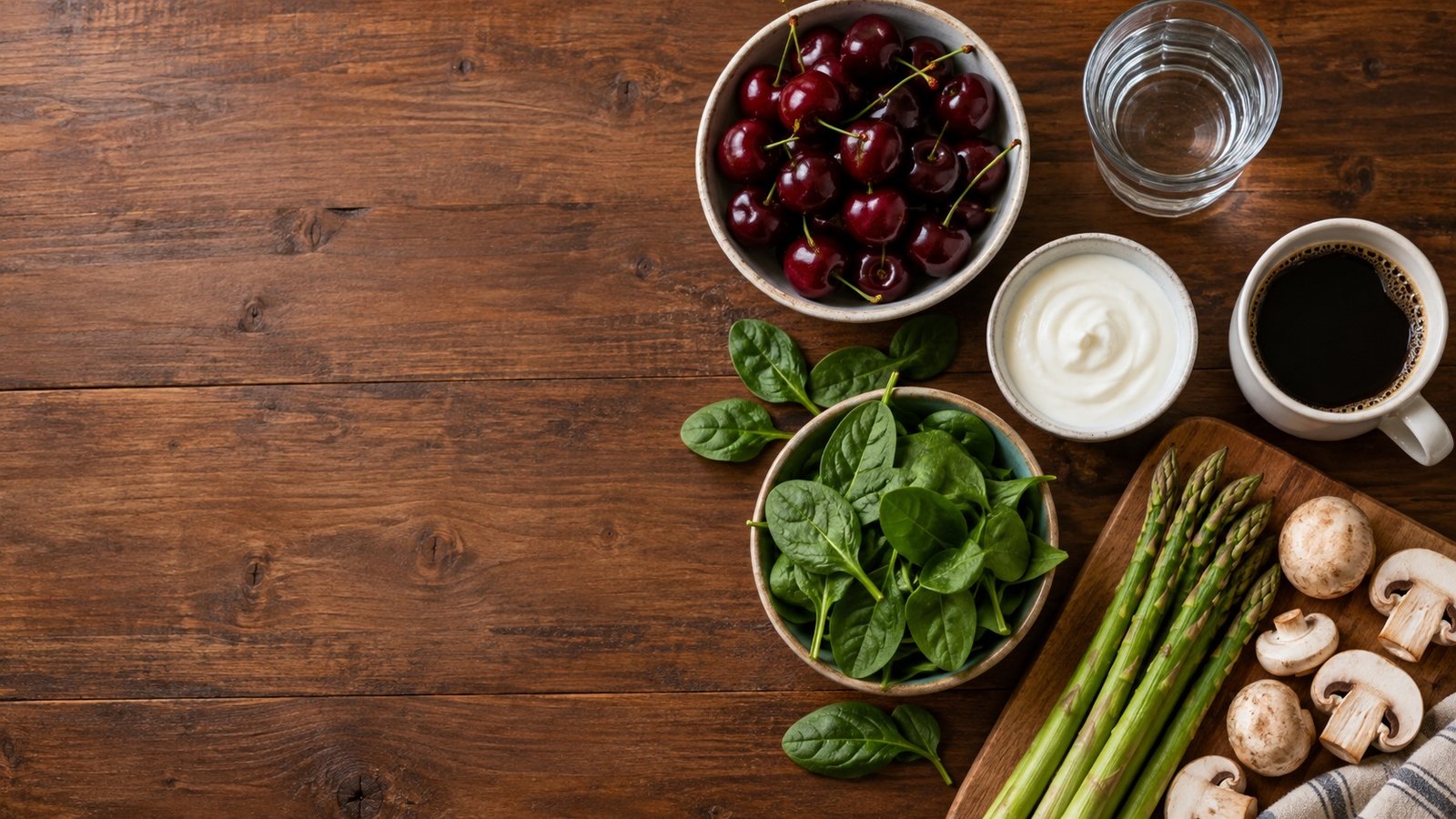
Diet has only a modest effect on uric acid, so talk with your doctor before relying on it — for many people with repeated flares, urate-lowering medication is what brings uric acid down. Low-fat dairy, coffee, cherries, and plenty of water have been linked to lower uric acid, a lower risk of gout, or fewer flares in some research, and most vegetables are fine to eat.
For most people with gout, no — unless your doctor has advised limiting them because of kidney disease or another condition. Although some vegetables contain purines, research has not linked purine-rich vegetables to a higher risk of gout the way meat and seafood are.
Get same-day care — urgent care or the ER if your doctor’s office is closed — if a joint is suddenly hot, red, and very swollen, especially with fever, broken skin, diabetes, or a weakened immune system; an infection can look like gout, and not having a fever does not rule it out. Also see a podiatrist for a first flare, flares that keep returning, or firm lumps near a joint.
No drink flushes uric acid out on its own, and diet rarely controls gout by itself. Beer, wine, and liquor have each been linked to more flares, and sodas or juices high in fructose can push uric acid higher. Water, coffee, and low-fat milk are generally better choices if they’re otherwise fine for you.